%20(1).jpg)
Stiffness, Weakness, and Recurring Pain: Break the Cycle with Physiotherapy in the GTA

Stiffness doesn’t just slow you down—it sets off a chain reaction. When your muscles tighten, your body compensates, leading to weakness that fuels recurring pain. At Therapic Physiotherapy in Mississauga, Oakville, and Burlington, we target this cycle with personalized care that restores your mobility and builds lasting strength. Ready to break free from stiffness and pain? Book today to start your path toward real relief.
Understanding Stiffness and Weakness
Stiffness and weakness are often interconnected, creating a cycle that can lead to ongoing discomfort. Let's explore how this cycle forms and impacts your body.
How Stiffness Limits Movement
Imagine trying to move with invisible ropes holding you back. That's what stiffness feels like. When muscles are tight, they restrict your range of motion. This limitation affects how you perform daily activities or enjoy hobbies. For instance, bending down to tie your shoes or reaching for something on a high shelf becomes challenging. Stiffness isn't just a minor inconvenience; it can drastically reduce your quality of life. Addressing it becomes essential not only for comfort but also for maintaining an active lifestyle.
Compensations Leading to Weakness
When one part of your body is stiff, other parts step in to help. This compensation might seem helpful at first, but it ends up causing more harm. For example, if your right shoulder is tight, your left shoulder might try to overcompensate. This leads to muscle strain and eventual weakness. As your body tries to adapt, you may find yourself dealing with new aches in unexpected places. Over time, these compensations result in weaker muscles, leaving you more vulnerable to injuries.
Triggers of Recurring Pain
Recurring pain is like an uninvited guest that keeps showing up. It often stems from the cycle of stiffness and weakness. When your muscles are weak, they can't support your joints properly. This lack of support leads to strain, which ignites pain. The longer this cycle continues, the harder it becomes to break free. Whether it's back pain from sitting too long or knee pain from a past injury, the root cause is often buried in this cycle.
Breaking the Cycle with Physiotherapy
Physiotherapy offers a structured approach to disrupting the stiffness-weakness-pain cycle. This involves thorough assessments and personalized treatment plans.
Comprehensive Assessment Process
Understanding your body's specific needs is the first step. During a comprehensive assessment, the physiotherapist examines how your body moves. They look at your posture, how you walk, and the way your muscles work together. This assessment helps identify the areas that need attention. Knowing exactly where the problem lies allows for targeted treatment, ensuring that every session brings you closer to relief.
Mobility Work and Restoration
Restoring mobility is crucial. Through tailored exercises and techniques, physiotherapy helps your muscles regain their full range of motion. Simple stretches or specific movements can greatly enhance how your body functions. You might start with small, controlled exercises that gradually become more challenging. Over time, these movements help relieve stiffness, allowing you to move more freely and with less pain.
Progressive Strengthening Techniques
Once mobility is improved, building strength is the next focus. Strengthening exercises are carefully structured to support your body's recovery. These exercises target weakened muscles, helping them become more resilient. As your strength increases, you'll notice everyday tasks becoming easier. The key is gradual progression, ensuring that each step builds on the last without overloading your body.
Advanced Modalities and Their Benefits
Integrating advanced therapies can enhance physiotherapy outcomes, offering additional relief and recovery support.
Laser and Shockwave Therapies
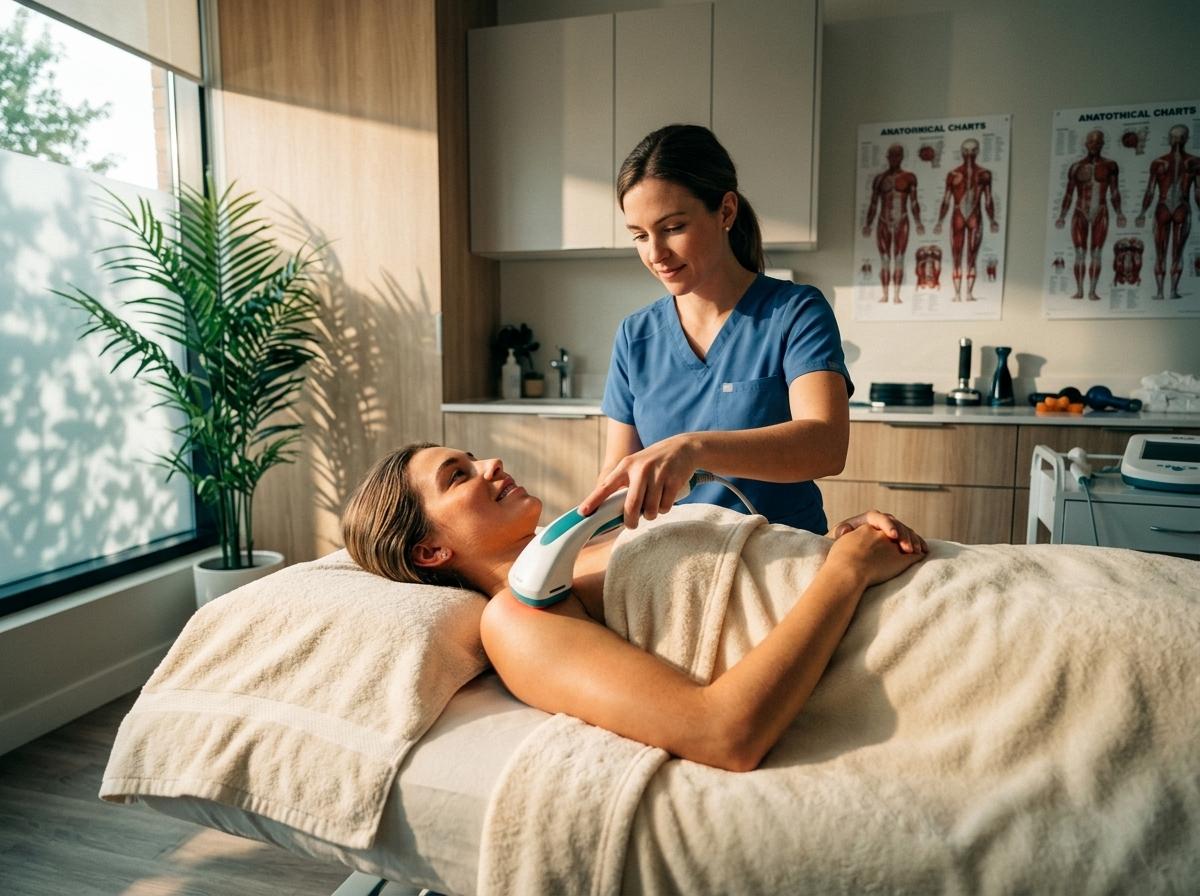
Laser therapy uses light to promote healing, while shockwave therapy sends acoustic waves to treat musculoskeletal conditions. Both are non-invasive and effective in reducing pain and speeding up recovery. They work by stimulating your body's natural healing processes, ensuring that you feel better faster. These therapies are especially beneficial for chronic conditions that haven't responded to traditional treatments.
Graston and Cupping Techniques
Graston Technique involves using specialized instruments to break down scar tissue and improve movement. Cupping therapy involves placing cups on your skin to create suction, which reduces pain and muscle tension. Both techniques help enhance blood flow and promote healing. They are particularly useful for addressing deep tissue issues, providing relief where other methods might not reach.
Kinesio Taping and Its Uses
Kinesio Taping involves applying a special tape to support muscles and joints. This technique enhances performance, reduces inflammation, and aids in recovery. It provides stability without restricting movement, making it ideal for athletes or anyone looking to improve their physical function. Whether you're recovering from an injury or looking to prevent one, Kinesio Taping offers valuable support.
Therapic Physiotherapy is here to help you break free from the cycle of stiffness and pain. With our expert care and advanced treatments, you can find relief and regain control of your life. If you're ready to take the first step, reach out to schedule your appointment today. Remember, the longer you wait, the longer your body remains in discomfort. Let's work together to restore your health and well-being.


Comments