%20(1).jpg)
How to Build a Recovery Plan That Actually Fits Real Life

Most recovery plans fail because they don’t fit your daily life. You need a recovery plan physiotherapy experts design to reduce pain and improve mobility without overwhelming your schedule. In this post, you’ll learn how to build a personalized physio plan that works for you and your busy routine. Ready to feel better? Request Appointment at Therapic Physiotherapy in Mississauga, Oakville, or Burlington.
Creating a Personalized Physio Plan
Your path to recovery starts by understanding your specific needs. This involves a detailed evaluation of your body and lifestyle.
Assessing Your Unique Needs
The first step is to identify what you need. You may have a sports injury or a chronic condition. Knowing what you're dealing with is crucial. During your initial assessment, your therapist will evaluate your pain points and mobility issues. They might ask about your daily activities and any past injuries. This helps in creating a plan that targets your specific problems.
A thorough assessment also considers your lifestyle. If you're a busy professional, your plan will accommodate your work schedule. Maybe you're a senior looking for gentle exercises. Your therapist will ensure your plan matches your day-to-day life.
Setting Achievable Recovery Goals
Once your needs are clear, the next step is setting goals. It’s important that these goals are realistic. You want to aim for improvements that are noticeable and reachable.
Your therapist will help you set both short-term and long-term goals. For instance, a short-term goal might be reducing pain by a certain percentage within a month. A long-term goal could be regaining full mobility in your knee. These goals keep you motivated and focused. They also allow you to track your progress.
Incorporating Technology and Techniques
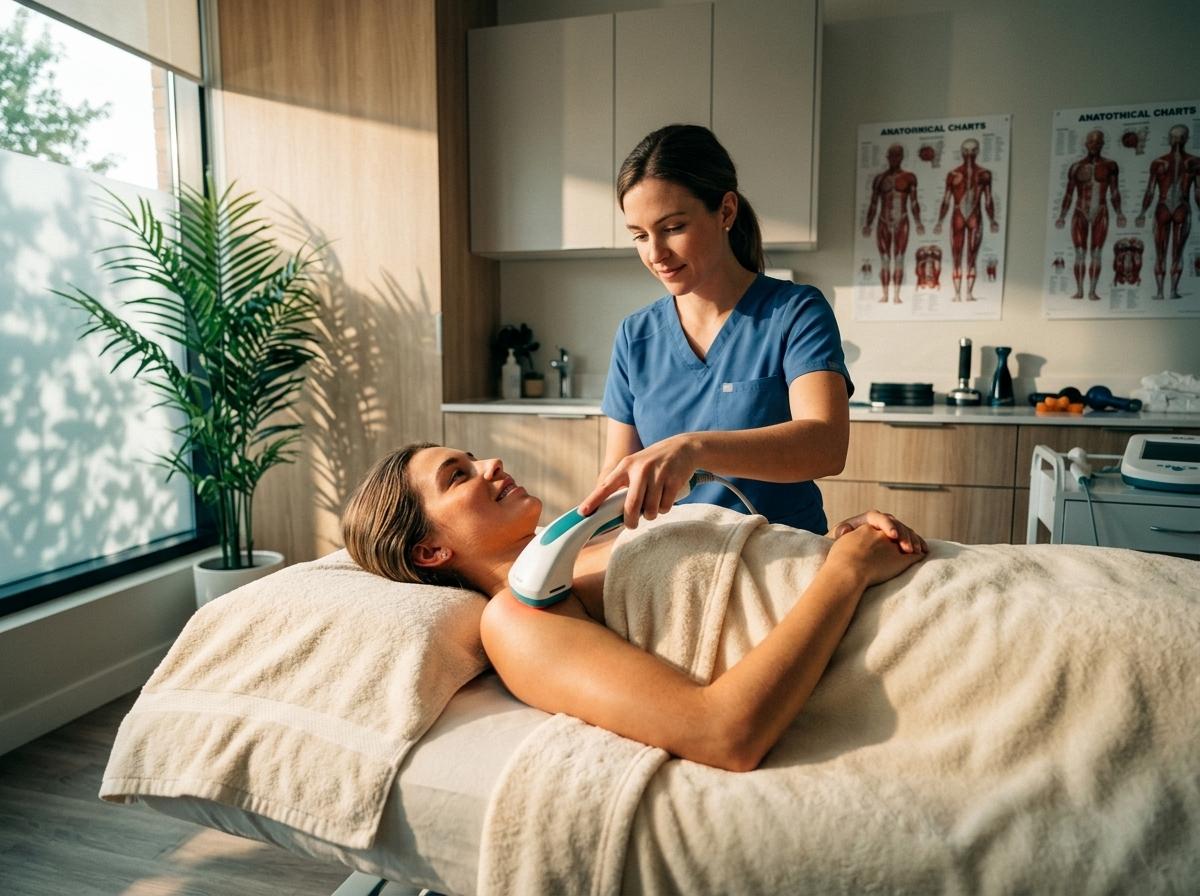
Technology plays a big role in modern physiotherapy. At Therapic, we use advanced tools to speed up recovery. Shockwave therapy is one option. It stimulates your body's natural healing process.
Another tool is laser therapy. It reduces pain and promotes healing. These technologies are combined with manual techniques like the Graston Technique. This involves using instruments to break down scar tissue. By mixing technology with hands-on methods, your recovery becomes more effective.
Tailoring Your Recovery Plan for Real Life
Your recovery plan should fit into your life, not disrupt it. Here's how to make it work for you.
Flexible Scheduling for Busy Lifestyles
Life gets busy, and fitting therapy sessions into your schedule might seem tough. Flexible scheduling is key. You can choose session times that work best for you. Maybe early mornings are ideal, or perhaps late afternoons suit you better. The goal is to make therapy a seamless part of your routine.
Your therapist will work with you to set appointments that won't interfere with your daily commitments. This flexibility helps ensure you stick with your plan, as it's easier to manage around your life.
Home Exercise Program Essentials
Outside of the clinic, home exercises are vital. They keep your recovery on track even when you're not with your therapist. A good home exercise program is simple yet effective.
You'll receive exercises tailored to your condition. These are designed to be easy to do at home, requiring minimal equipment. Consistency is key, and your therapist will guide you on how often to do these exercises. The more you practice, the quicker you'll see results.
Telehealth Physiotherapy Options
For times when visiting the clinic is not possible, telehealth is a great option. It allows you to have sessions with your therapist from the comfort of your home.
Telehealth sessions are just as interactive as in-person visits. Your therapist can guide you through exercises and evaluate your progress online. This option is perfect for maintaining your therapy routine even when life gets in the way. It ensures you have access to professional support whenever you need it.
Exploring Treatment Options
Understanding the treatment options available can help you make informed decisions about your recovery.
Benefits of Shockwave Therapy
Shockwave therapy is a powerful tool in treating musculoskeletal issues. It uses acoustic waves to stimulate healing. This method is particularly effective for conditions like plantar fasciitis and tennis elbow.
During a session, the therapist will apply the shockwave to the affected area. This stimulates blood flow and promotes tissue repair. Many patients notice improvement after just a few sessions. Shockwave therapy is a non-invasive option that can significantly reduce pain and improve mobility.
Laser Therapy for Pain Relief
Laser therapy is another excellent option for pain relief and healing. It involves using laser light to target problem areas. This process speeds up cellular activity, helping your body heal faster.
Laser therapy is painless and quick, making it a convenient choice for busy schedules. It's suitable for various conditions, from back pain to knee issues. With regular sessions, you can experience significant pain reduction and improved function.
Utilizing the Graston Technique and Cupping Therapy
The Graston Technique involves using specialized tools to break down scar tissue and fascial restrictions. This method enhances mobility and reduces pain. It's often used in combination with cupping therapy, which involves creating suction on the skin to relieve muscle tension.
Both techniques are effective in treating chronic pain and injuries. They complement other therapies like shockwave and laser, providing a comprehensive approach to recovery. By incorporating these methods, you maximize the potential for healing and improved function.
🌟
Overall, creating a recovery plan that fits your life involves understanding your needs, setting realistic goals, and utilizing modern technology and techniques. Flexible scheduling, home exercises, and telehealth options ensure that the plan integrates seamlessly with your daily routine. By exploring advanced treatment options, you can experience effective pain relief and mobility improvement. If you're ready to start your recovery journey, consider booking an appointment at Therapic Physiotherapy in Mississauga, Oakville, or Burlington.


Comments